Beyond the Seat: Why SaaS is Metamorphosing into "Service as Software"
Beyond the Seat: Why SaaS is Metamorphosing into "Service as Software"
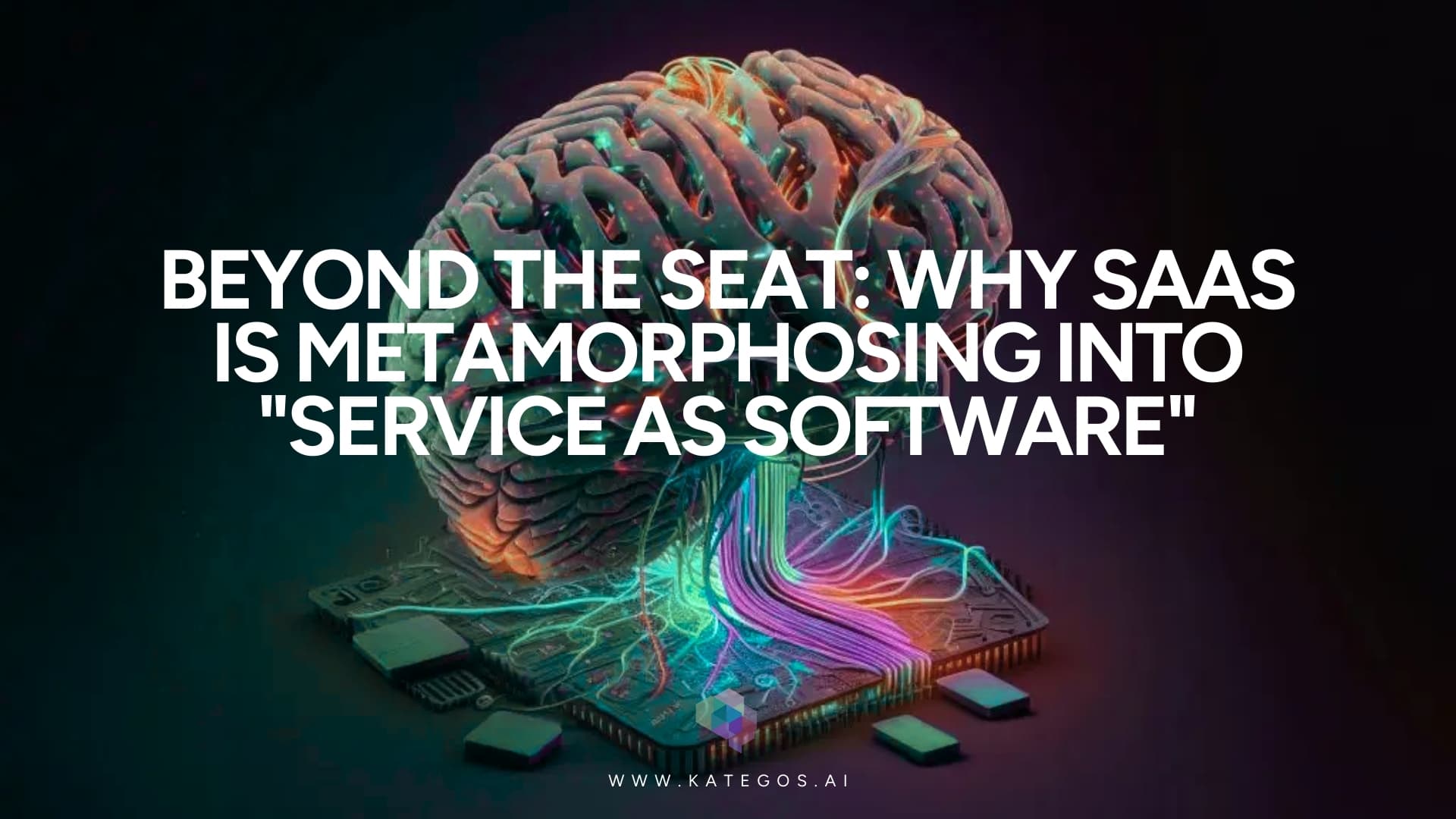
The traditional Software-as-a-Service (SaaS) model is currently encountering a terminal bottleneck. For two decades, enterprises in tech hubs from the Silicon Slopes of Utah to the Silicon Desert of Arizona purchased "seats" and "licenses"—essentially paying for the right to let humans use tools. However, as AI transitions from merely assisting work to autonomously performing it, the "per-user" model is becoming obsolete. We are witnessing the "SaaSpocalypse," a fundamental shift toward Service as Software (SaS), where value is derived from outcomes rather than access.
The Inversion: From Tools to Autonomous Outcomes
In the legacy paradigm, SaaS was a tool for humans; in 2026, SaS is a service delivered by software. Traditional CRM systems required manual data entry and lead nurturing by sales teams in Nevada and Idaho. In contrast, modern AI strategy now prioritizes autonomous agents that qualify, personalize, and close deals without constant human prompting. Consequently, the value proposition has shifted from providing a digital workspace to delivering a finished business result.
The $400 Billion Opportunity in Agentic Workflows
Research from McKinsey & Company indicates that while traditional IT services may shrink, agentic workflow services could unlock $400 billion in incremental spending by 2030. AI consulting firms are already helping Southwestern enterprises bridge the "pilot-to-production" gap, as only 11% of organizations currently have agents in full production. Moreover, PwC Global predicts that one-third of professional services firms will soon derive 75% of their revenue from these digital, AI-driven services.
Regional Leadership: The Southwest Intelligence Frontier
States like Utah and Arizona are not merely following these trends; they are setting them through proactive legislation. For example, the Utah AI Policy Act mandates transparency in AI interactions, while Arizona’s HB 2410 provides "privileged communication" status to AI dialogues. Therefore, a robust AI digital marketing strategy in these regions now requires "Context Engineering"—structuring data so that autonomous agents can find and recommend services accurately.
Disrupting the Budget Logic: Paying for Performance
As Deloitte US highlights, 2026 is the year of the "agentic reality check." Organizations are moving away from incremental IT management toward orchestrating human-agent teams. Consequently, businesses must ask if their 2027 budgets are still tied to headcount or if they are ready to transition to outcome-based economics. This evolution ensures that investment is directly correlated with measurable productivity gains and revenue growth.
FAQs
What is the difference between SaaS and Service as Software (SaS)? Traditional SaaS provides tools for humans to perform tasks, usually billed per user. Service as Software (SaS) utilizes AI agentic use to perform the work itself, billing based on the successful completion of specific business outcomes.
How does Generative Engine Optimization (GEO) impact AI digital marketing? GEO focuses on structuring brand data so that AI agents and search engines can easily synthesize it. In 2026, AI strategy involves optimizing for "agentic discovery" rather than just traditional keyword clicks.
Why is the "per-seat" model failing in 2026? As AI agents replace human tasks, the number of required licenses (seats) drops. To survive, software providers are shifting to "outcome-based" or "consumption-based" pricing to align their revenue with the actual value delivered.
Conclusion
The metamorphosis from SaaS to SaS represents a fundamental architectural evolution of the global economy. By embracing agentic workflows and outcome-based models, businesses in the Southwest can secure a compounding competitive advantage. The transition requires a disciplined, top-down AI strategy that prioritizes transformation over simple automation. Are you ready to stop paying for seats and start paying for results?
References
- McKinsey & Company – https://www.mckinsey.com/capabilities/people-and-organizational-performance/our-insights/the-state-of-organizations
- Deloitte US – https://www.deloitte.com/us/en/insights/topics/technology-management/tech-trends.html
- PwC Global – https://www.pwc.com/us/en/tech-effect/ai-analytics/ai-predictions.html
- Kategos AI – https://kategos.ai/ai-consulting-2026-mastering-agentic-strategy/
- Bain & Company – https://www.bain.com/
More field notes.
May 13, 2026
The Consulting Revolution: From Strategy Decks to Agentic Execution
The Consulting Revolution: From Strategy Decks to Agentic Execution
May 8, 2026
The Architecture of Trust: Sovereignty, Security, and the "Agentic" Upgrade
The Architecture of Trust: Sovereignty, Security, and the "Agentic" Upgrade
May 8, 2026
The 2026 AI Industrial Complex—Ecosystems, Alliances, and the Shift to "Sovereign-as-a-Service"
The 2026 AI Industrial Complex—Ecosystems, Alliances, and the Shift to "Sovereign-as-a-Service"
Have a problem this kind of work could move?
Tell us what you have. We will make it possible.